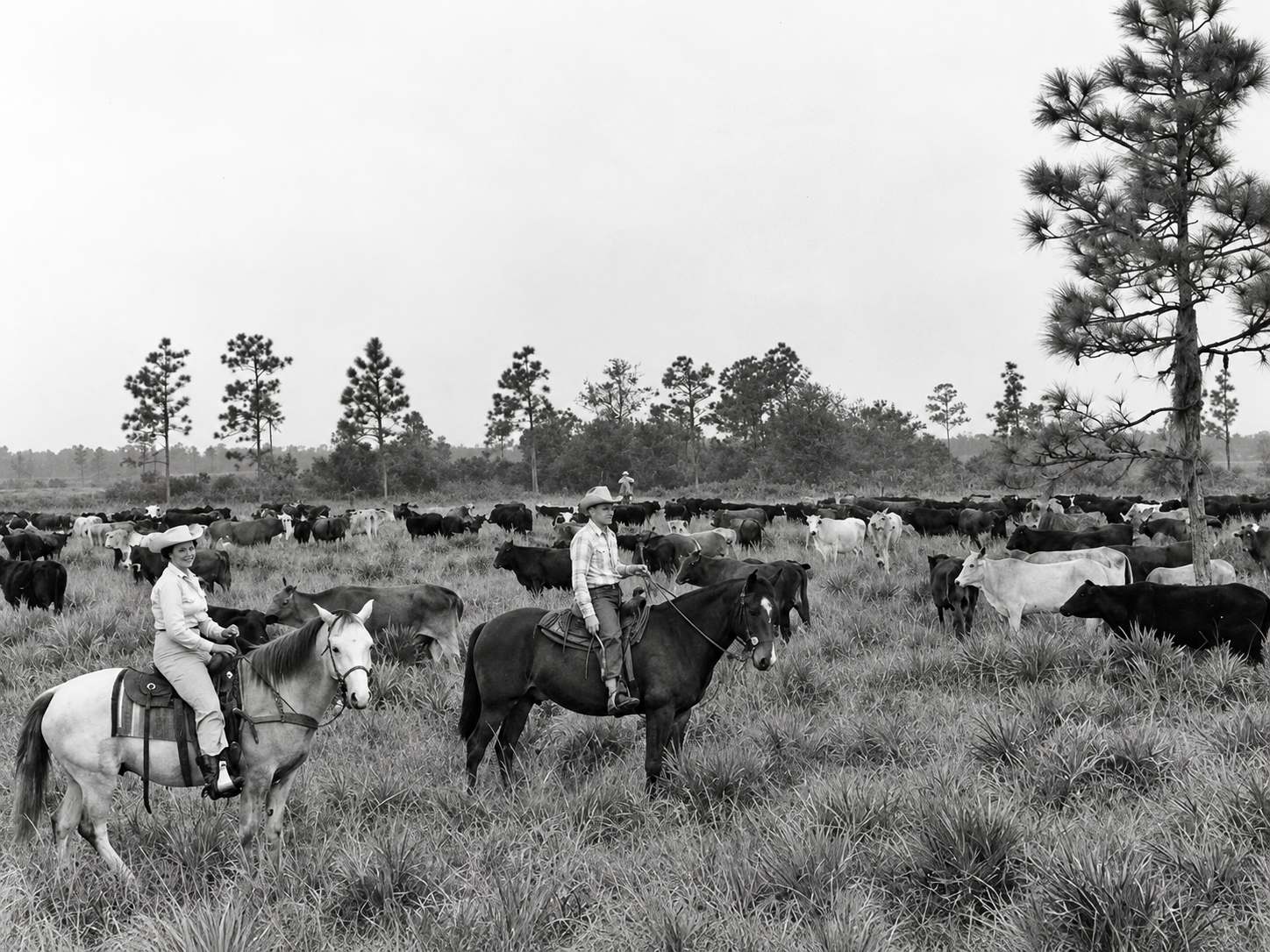
Before Waterside Place, before Main Street, before golf courses, restaurants, new homes, and community events, this part of Florida looked very different.
There were cattle. Timber operations. Citrus groves. Tree and turf farms. Mining operations. Large stretches of working land.
That surprises a lot of people who are moving to Lakewood Ranch, Florida. From the outside, Lakewood Ranch can feel like a relatively new place that appeared as one carefully planned community.
The real story goes back more than a century.
And if you're relocating from another state, knowing a little about the history of Lakewood Ranch can give you a much better sense of the place you're considering calling home.
Quick answer: Before Lakewood Ranch became a master-planned community, much of the land was Schroeder-Manatee Ranch, a working property with timber, cattle, citrus, tree and turf farming, and aggregate mining operations.
What was Lakewood Ranch before it was Lakewood Ranch?
Lakewood Ranch started as working Florida land, not as a residential community.
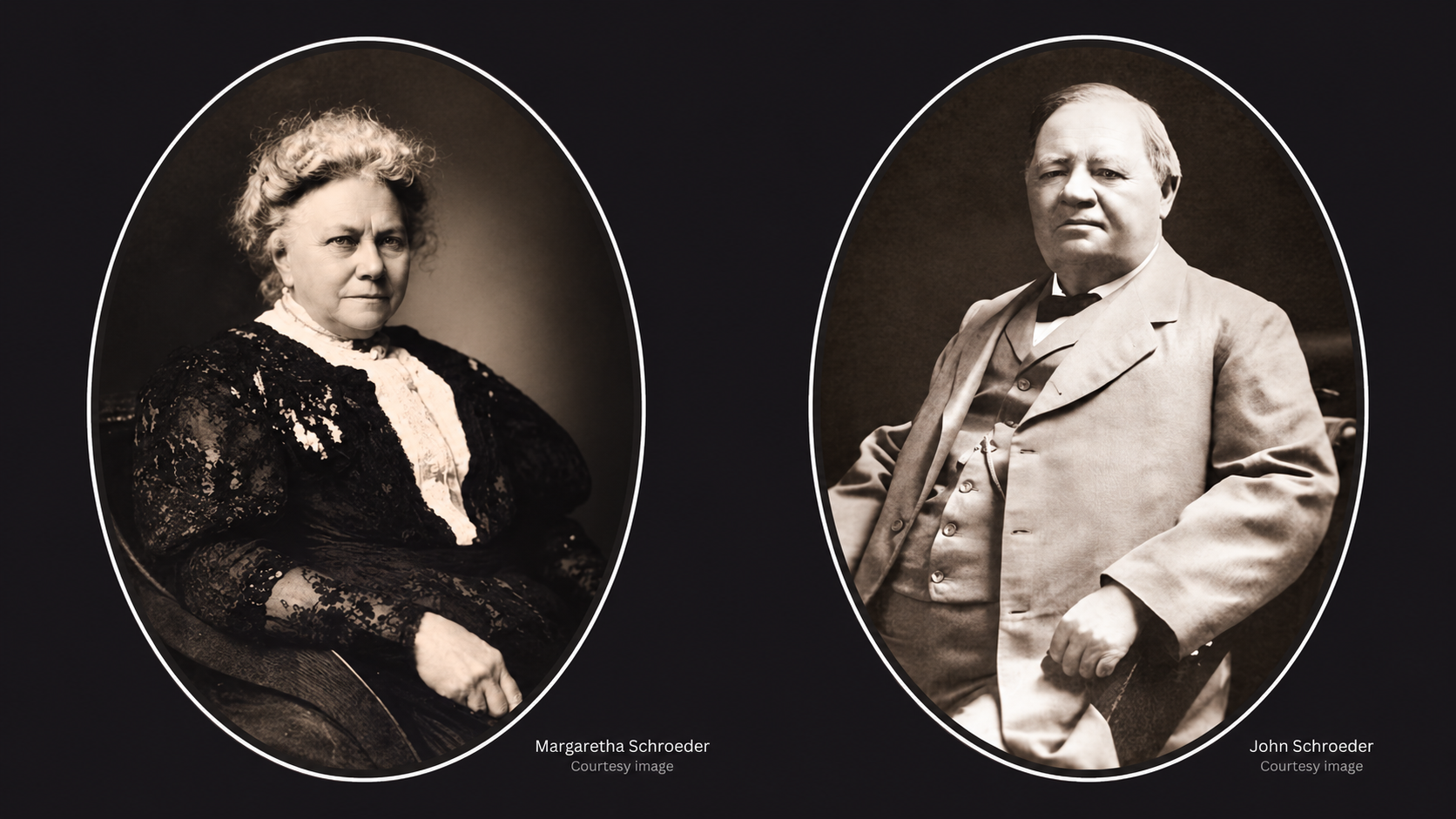
In 1905, Milwaukee businessman John Schroeder assembled property in the area that became known as Schroeder-Manatee Ranch, often shortened to SMR. Historical records describe the early operation as heavily connected to timber. Cattle and other agricultural businesses followed over time.
The land eventually supported several types of work:
- Cattle ranching
- Timber operations
- Citrus production
- Tree farming
- Turf farming
- Shell and aggregate mining
- Water management and other agricultural operations
That is a very different picture from the Lakewood Ranch people know today.
Yet there is a connection between the two.
Lakewood Ranch wasn't placed on land with no prior identity. The community grew from a working ranch with decades of land management behind it.
Who owned the land before Lakewood Ranch was built?
The Uihlein family, associated with Milwaukee's Schlitz Brewing Company, acquired Schroeder-Manatee Ranch in 1922, according to Lakewood Ranch historical timelines and the Manatee County Public Library's historical collection.
The property stayed under family ownership while its business activities changed through the decades.
That long ownership period matters because Lakewood Ranch did not begin with a developer purchasing a few hundred acres and immediately putting in streets and houses.
The land had already been managed for generations.
Lakewood Ranch's current parent company, Schroeder-Manatee Ranch, traces directly back to that earlier operation. Today, Lakewood Ranch spans more than 35,000 acres across portions of Manatee and Sarasota counties.
For someone relocating to Lakewood Ranch, that's helpful context. You're looking at a community whose history reaches much farther back than its newest villages, shops, and homes might suggest.
What kinds of work happened on the ranch?
Think less about subdivisions and more about the businesses that helped support Florida's growth during the 1900s.
Cattle and timber were important early activities. Later, operations included citrus, tree and turf farming, along with aggregate mining.
One particularly interesting part of the story involves the lakes.
Some shell and aggregate mining operations created large bodies of water that later became community features. A Lakewood Ranch Stewardship District document notes that mining produced road-building materials while also creating large lakes later used as amenities.
So when you're driving through Lakewood Ranch and looking across one of its large stretches of water, the history behind what you're seeing may go back much further than the homes surrounding it.
Lakewood Ranch officials also point to a long history of water management, conservation, and land preservation as part of SMR's work before and during residential development.
The past is not sitting in a museum somewhere. Pieces of it are still part of the community's physical character.
Was there a town here before Lakewood Ranch?
There was a small settlement called Lorraine near what is now the area around State Road 70 and Lorraine Road.
According to the Manatee County Public Library's historical collection, Lorraine was established around 1915 at a stop on the East & West Coast Railroad. The small community included a post office, a store, and several homes, and people working in the timber and turpentine businesses lived there.
By the mid-1920s, those businesses had closed and the settlement faded away.
Today, Lorraine Road is one of the names you hear constantly while looking at Lakewood Ranch real estate.
It's a good reminder that many names on a map carry stories that came long before the current neighborhoods.
Even the name "Lakewood Ranch" has a connection to what came before. The Manatee County Public Library notes that, according to one of the developers, the name reflected a ranch characterized by lakes and wooded areas.
When did Lakewood Ranch become a residential community?
The change didn't happen all at once.
Planning for residential development began years before buyers started moving into homes.
Here's a simple Lakewood Ranch history timeline:
- 1905: John Schroeder assembles land that becomes Schroeder-Manatee Ranch.
- 1915: The small Lorraine settlement is established near a railroad stop.
- 1922: The Uihlein family acquires Schroeder-Manatee Ranch.
- 1960s onward: Ranch activities grow beyond cattle and timber into citrus, tree and turf farming, and mining.
- 1983: Initial planning for a residential community begins.
- 1994: Groundbreaking begins for Lakewood Ranch.
- 1995: The first homes are built in Summerfield.
Schroeder-Manatee Ranch formally moved into community development in 1994.
From there came neighborhoods, businesses, schools, medical services, recreation, town centers, and the amenities people now associate with life in Lakewood Ranch.
It can be easy to look at today's community and assume everything happened recently.
It didn't.
More than 100 years of ownership, agriculture, land use, road planning, water management, and development came before what you see today.
Why does Lakewood Ranch history matter if you're relocating here?
Because buying a home isn't only about square footage, countertops, and the number of bedrooms.
You're also choosing where your everyday life will happen.
Maybe you picture yourself having coffee outside on a Florida morning. Maybe your weekends include golf, boating, fishing, a trip to the beach, or dinner near Waterside Place. Maybe you want convenient access to shopping while still having trails, parks, lakes, and outdoor recreation nearby.
Once you start looking closely at Lakewood Ranch, you'll also realize that one part of the Ranch can feel very different from another.
That's where the history becomes useful.
It helps you understand why the area is so large, why development happened in stages, and why communities built during different periods can offer very different home styles, amenities, locations, and surroundings.
The house matters, but so does its place within Lakewood Ranch.
That's especially true when you're buying from another state and trying to understand everything through listings, maps, photos, and a short visit.
How can local knowledge help you choose where to buy?
A map can tell you where a house sits.
It can't always tell you what your Tuesday afternoon might feel like once you live there.
That's one reason Mike Novak spend so much time talking with relocating buyers about their actual day-to-day plans before focusing heavily on specific homes.
Do you want to be closer to Waterside Place?
Is golf important?
How often do you expect to head toward Sarasota?
Do you prefer newer construction or an established part of the Ranch?
Would access to restaurants and community events matter more than having additional space at home?
How much time do you expect to spend outdoors?
Those conversations often make the home search much clearer.
Mike Novak worked in real estate for more than 28 years, grew up in a multi-generational real estate family, and live in Lakewood Ranch Florida. Mike's goal isn't simply to send you listings. It's to give you enough local context to make a decision that feels right once you're actually living here.
That is the part of relocating that can be difficult to get from a website.
You can research home prices online. You can see bedrooms, bathrooms, community fees, and photos.
But understanding how the different parts of Lakewood Ranch relate to one another usually takes a little more conversation.
What should you remember about Lakewood Ranch before buying here?
The biggest takeaway is simple:
Lakewood Ranch has much older roots than most relocating buyers realize.
Long before the first homes were built, the land supported timber operations, cattle ranching, citrus, farming, mining, and a small railroad settlement.
Residential planning began in the 1980s, groundbreaking followed in 1994, and the first homes arrived in Summerfield in 1995.
Today, Lakewood Ranch is a large master-planned community spanning Manatee and Sarasota counties, with residential areas, town centers, businesses, recreation, medical services, parks, trails, and other amenities.
For me, understanding that background makes living here more interesting.
You aren't simply looking at the latest community in Florida.
You're seeing the newest chapter of land that has been worked, managed, and cared for in many different ways for more than a century.

Check out this article next