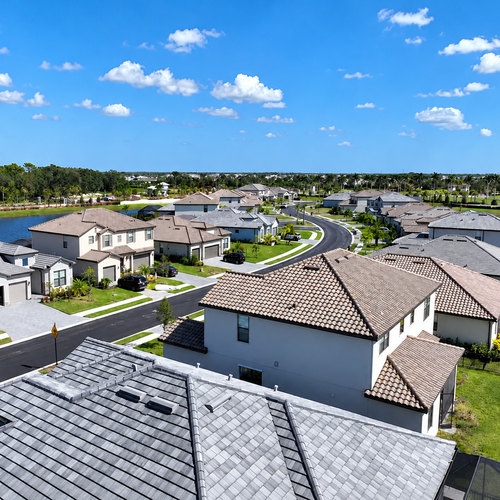
Florida's newly approved Amendment 3 is bringing significant changes to property taxes, and homeowners in Lakewood Ranch are among those who could benefit.
Approved by Florida voters on November 3, 2026, the amendment increases the homestead property tax exemption for eligible primary residences, introduces new residency requirements, and changes how certain non-homestead properties are assessed.
But there's an important distinction between the amendment's January 1, 2027 effective date and the December 31, 2026 residency cutoff. For buyers planning a move to Lakewood Ranch, understanding both dates could make a meaningful difference in future property-tax planning.
The changes also raise practical questions for existing homeowners, sellers, seasonal residents, and investors. Does every Lakewood Ranch neighborhood qualify? What happens to CDD fees? And will the new exemption actually lower a homeowner's tax bill?
Here's what the new law means for Lakewood Ranch real estate.
What Is Florida Amendment 3, and When Does It Take Effect?
Amendment 3 is a voter-approved change to the Florida Constitution that expands property tax relief for qualifying homeowners while adjusting certain assessment rules for other properties.
Florida voters approved Amendment 3 on November 3, 2026, with approximately 62% voting in favor.
According to Florida Realtors' official post-election report, the amendment officially takes effect on January 1, 2027.
The key changes include:
- Increasing the homestead exemption for non-school property taxes to $150,000 in 2027.
- Increasing that exemption to $250,000 in 2028.
- Adjusting the expanded exemption for inflation beginning in 2029.
- Introducing new residency requirements for people who are not permanent Florida residents by December 31, 2026.
- Lowering the annual assessment-growth cap for qualifying non-homestead properties from 10% to 5% for non-school taxes.
- Establishing additional rules governing how county and municipal property-tax revenues are used.
Important: Amendment 3 does not change anyone's 2026 property-tax bill.
The Sarasota County Tax Collector confirms that the voter-approved changes first apply to the 2027 tax year and will be reflected in the bills issued in November 2027.
Does Amendment 3 Apply to Lakewood Ranch, Florida?
Yes. Amendment 3 applies statewide, including qualifying properties throughout Lakewood Ranch in both Manatee County and Sarasota County.
Lakewood Ranch is a master-planned community spanning two counties. Although individual neighborhoods have different amenities, property values, HOA fees, and special assessments, qualifying homeowners are subject to Florida's statewide homestead exemption rules.
For example, eligible primary residences in communities such as Country Club East, Lorraine Lakes, Star Farms, and Wild Blue at Waterside may benefit from the expanded exemption.
However, owning a home in one of these communities does not automatically guarantee the maximum benefit.
Eligibility depends on several factors:
- Whether the property qualifies as the owner's permanent primary residence.
- Whether the homeowner qualifies for Florida's homestead exemption.
- The homeowner's Florida residency history.
- The property's assessed and taxable values.
- Applicable local taxing authorities and assessments.
This matters when comparing homes across Lakewood Ranch's different neighborhoods. Two properties with similar purchase prices may have very different total ownership costs.
How Much Could Lakewood Ranch Homeowners Save Under Amendment 3?
The amendment increases the amount of a qualifying home's assessed value that can be exempted from non-school property taxes.
Here is how the exemption changes.
| TAX YEAR | MAXIMUM HOMESTEAD EXEMPTION FOR NON-SCHOOL TAXES |
|---|---|
| 2026 | $51,411 |
| 2027 | $150,000 |
| 2028 | $250,000 |
| 2029 onward | Adjusted annually for inflation |
These figures represent exempt assessed property value, not direct cash savings. The 2026 maximum reflects the existing inflation-adjusted exemption.
For qualifying homeowners, the expanded exemption can reduce the taxable value used to calculate county and other applicable non-school property taxes.
A simplified Lakewood Ranch example
Consider an eligible homeowner whose property has an assessed value of $300,000.
In 2027, up to $150,000 of that assessed value could be exempt from non-school property taxes. This would leave $150,000 subject to those taxes, before other applicable adjustments.
In 2028, assuming the property's assessed value remains $300,000, the increased $250,000 exemption could leave just $50,000 subject to non-school property taxes.
That does not mean the homeowner saves $150,000 or $250,000 in taxes.
Actual savings depend on the applicable millage rates, taxable assessed value, other exemptions, and local assessments.
School district property taxes continue to apply separately.
The Manatee County Property Appraiser's Amendment 3 guidance explains the proposed exemption structure, school-tax treatment, and continuing property-tax obligations.
For longtime Lakewood Ranch homeowners, existing Save Our Homes protections may also affect the amount of additional relief.
The right comparison is therefore a property's taxable assessed value before and after the amendment, rather than simply its market value or listing price.
December 31, 2026: Why Florida Residency Matters
One of the most significant provisions of Amendment 3 involves when a person establishes permanent Florida residency.
Under the amendment, those who are permanent Florida residents by December 31, 2026, may qualify for the expanded homestead exemption without the new five-year waiting period, provided they meet the applicable homestead requirements.
Importantly, this does not necessarily mean someone must purchase a home by December 31.
Someone who has already established permanent Florida residency while renting may qualify for the increased exemption after purchasing and occupying an eligible primary residence.
For buyers considering Lakewood Ranch, there are two separate questions:
- When did the buyer establish permanent Florida residency?
This may determine eligibility for the expanded exemption without the waiting period.
- When does the buyer own and occupy the home as a permanent residence?
This determines when the property can first qualify for homestead exemption.
Under Florida's standard homestead rules, applicants generally must own and permanently occupy the property as of January 1 of the tax year and file by March 1.
For example, someone purchasing a home in Lakewood Ranch during 2027 may not qualify for homestead exemption until 2028, even if they established permanent Florida residency in 2026.
The Sarasota County Property Appraiser's homestead exemption guide explains the ownership, occupancy, application, and residency documentation requirements.
A purchase contract alone does not automatically establish Florida residency or guarantee the expanded exemption.
What Happens If Someone Moves to Lakewood Ranch in 2027 or Later?
For people who first establish Florida residency on or after January 1, 2027, Amendment 3 introduces a different path to the expanded exemption.
These homeowners generally begin with the existing homestead exemption when they first qualify.
The increased exemption becomes available beginning in their fifth year of receiving homestead exemption, subject to applicable legal requirements and implementing rules.
Example: Relocating to Lakewood Ranch in 2027
Consider someone moving from another state and purchasing a qualifying primary residence in Lakewood Ranch during 2027.
Assuming the buyer first qualifies for homestead exemption in 2028 and remains continuously eligible, the general timeline would be:
| YEAR | HOMESTEAD STATUS |
|---|---|
| 2027 | Purchases and occupies a home |
| 2028 | First year receiving homestead exemption |
| 2029 | Second year |
| 2030 | Third year |
| 2031 | Fourth year |
| 2032 | Fifth year — expanded exemption generally becomes available |
This example illustrates the amendment's general waiting-period structure. Final implementation requirements should be confirmed with the relevant county property appraiser.
The distinction matters for relocation planning because two buyers purchasing similarly priced Lakewood Ranch properties in the same year may qualify for different exemption amounts based on their Florida residency history.
Do Lakewood Ranch CDD Fees
and HOA Fees Change Under
Amendment 3?
A larger homestead exemption does not mean all property-related charges will decrease.
Many Lakewood Ranch neighborhoods have costs associated with Community Development Districts, the Lakewood Ranch Stewardship District, homeowners' associations, or other special assessments.
These charges are separate from the homestead exemption.
↘ CDD and Stewardship District assessments
CDD and Stewardship District assessments can fund infrastructure, community improvements, operations, and maintenance.
Depending on the neighborhood, applicable non-ad valorem assessments may appear on the homeowner's annual property-tax bill.
Amendment 3 does not automatically reduce or eliminate these assessments.
For example, the Lorraine Lakes community guide explains that the neighborhood has Stewardship District assessments that are separate from HOA dues.
The same principle applies when evaluating other Lakewood Ranch properties, although the specific assessments and amounts vary by address.
↘ HOA fees
HOA fees are separate from homestead property taxes.
These fees may cover landscaping, recreation, shared facilities, security, or community maintenance, depending on the neighborhood.
Amendment 3 does not directly reduce HOA dues.
Buyers comparing neighborhoods should review what is actually covered by each association.
For a more detailed explanation of how these responsibilities differ, see the guide to maintenance-included versus owner-maintained neighborhoods in Lakewood Ranch.
A lower property-tax obligation may help with the overall cost of ownership, but HOA fees, insurance, maintenance, and district assessments still need to be included in the budget.
What Does Amendment 3 Mean for Lakewood Ranch Home Buyers?
The amendment introduces new considerations for buyers, particularly those relocating from another state or comparing primary residences with second homes.
↘ Buyers relocating to Florida
A buyer's residency history can affect when the expanded exemption becomes available.
Someone who established permanent Florida residency by December 31, 2026, may be treated differently from someone who becomes a resident in 2027 or later.
However, buyers should not assume that purchasing a home before the cutoff automatically establishes residency or guarantees the exemption.
↘ Buyers comparing new construction and resale homes
The amendment does not eliminate the need to estimate future property taxes carefully.
In Florida, a change of ownership generally triggers reassessment under applicable property-tax rules.
This is especially important for buyers comparing newer developments such as Wild Blue at Waterside with established resale communities.
A resale listing may show relatively low annual property taxes because the seller has owned the home for years and benefits from existing assessment protections.
A new buyer's future taxable value could be significantly different.
The same concern applies when comparing newly constructed and resale properties in communities such as Lorraine Lakes.
Buyers should request a property-specific tax estimate based on their circumstances rather than relying solely on the seller's most recent tax bill.
↘ Buyers purchasing second homes
Seasonal homes that are not the owner's permanent primary residence do not qualify for the expanded homestead exemption.
However, certain non-homestead properties may benefit from Amendment 3's lower annual assessment-growth cap.
The distinction between homestead and non-homestead property is particularly important when buying a vacation home in Lakewood Ranch.
What Does Amendment 3 Mean for Lakewood Ranch Home Sellers?
For sellers, Amendment 3 adds another factor to discussions about long-term homeownership costs.
Eligible buyers may be interested in how the expanded homestead exemption affects their future expenses.
However, the amount of any benefit depends on the buyer's personal eligibility and the property's future assessed value.
A seller's current property-tax bill should never be presented as the amount a new owner will necessarily pay.
Longtime homeowners may have relatively low assessed values due to Florida's Save Our Homes protections. A sale can trigger reassessment, creating a different tax picture for the purchaser.
Sellers preparing to list their homes should understand the difference between:
- The property's current market value.
- The existing owner's assessed value and exemptions.
- The property's likely reassessment following a sale.
- The new buyer's individual homestead eligibility.
- Continuing HOA and district assessment expenses.
For luxury communities such as The Lake Club, these distinctions can become especially important because of higher property values and varying ownership costs.
Clear, accurate information can help buyers understand the full cost of ownership without overstating the financial benefits of Amendment 3.
What About Lakewood Ranch Rental Properties and Investment Homes?
Amendment 3 also changes assessment rules for qualifying non-homestead properties.
Beginning in 2027, the annual cap on increases in assessed value for non-school property taxes decreases from 10% to 5%.
This can apply to certain:
- Long-term rental properties.
- Vacation homes.
- Investment properties.
- Non-homestead residential properties.
- Commercial properties.
The lower cap may moderate how quickly the taxable assessed value increases, particularly when market values are rising.
However, a 5% assessment cap does not mean a property's total tax bill can increase by only 5%.
Actual taxes also depend on millage rates, school taxes, reassessment rules, and applicable fees.
For further explanation of how non-homestead properties are treated, see the Florida Realtors Amendment 3 breakdown.
For Lakewood Ranch investors, the provision may help with long-term planning, but it should not be treated as a guaranteed reduction in annual property taxes.
Will Amendment 3 Affect Local Services in Manatee and Sarasota Counties?
Amendment 3 also affects local government finances.
Because the expanded homestead exemption reduces taxable assessed value for certain non-school levies, counties and other taxing authorities may collect less property-tax revenue than they otherwise would.
The amendment also addresses permitted uses of county and municipal property-tax revenue, including public safety, infrastructure, education, natural resources, debt obligations, and government operations.
State and local officials will need to address implementation and budget considerations.
For Lakewood Ranch residents, the important distinction is that the amendment changes how certain property taxes are calculated, but it does not guarantee a particular level of funding for every local service.
The precise effects on future local budgets, millage rates, and services will depend on implementation and subsequent government decisions.
Where Lakewood Ranch Buyers and Homeowners Can Verify Their Property Tax Information
Because Lakewood Ranch extends across Manatee and Sarasota counties, property owners should confirm which county has jurisdiction over the property they own or plan to purchase.
The property appraiser determines assessed values and administers exemptions, while the tax collector issues and collects annual property-tax bills.
As of November 10, 2026, additional implementation procedures are still being addressed. Property owners should verify the latest requirements before making tax or residency decisions.
The Bottom Line: Amendment 3 Changes the Numbers, but the Property Still Matters
Amendment 3 represents a significant change to Florida's property-tax system, and its expanded homestead exemption may benefit eligible Lakewood Ranch homeowners beginning in 2027.
Yet the amount of relief is not the same for everyone.
A longtime resident, a first-time Florida buyer, a seasonal homeowner, and someone purchasing an investment property can all experience different outcomes under the same amendment.
For buyers and sellers in Lakewood Ranch, understanding the property's location, assessed value, homestead eligibility, and ongoing community fees remains essential.
The right home starts with the right information.



Where Lakewood Ranch Buyers and Homeowners Can Verify Their Property Tax Information
Because Lakewood Ranch extends across Manatee and Sarasota counties, property owners should confirm which county has jurisdiction over the property they own or plan to purchase.
The property appraiser determines assessed values and administers exemptions, while the tax collector issues and collects annual property-tax bills.
For official information, homeowners can consult:
Check out this article next